 personal links:
 my blog
 february 18, 2026
I’ve had some terrible dreams recently. In one, I was loaded onto a train and sent to an enormous prison; I couldn’t see any guards, but I felt their eyes on my back. In another, I showed my parents something I’d posted online, realizing too late that they would certainly visit my account and discover my secrets. When they did, my father erupted in anger. My sister consoled me as my father called me a “waste of sperm.” In a third dream, I wept at my mother’s funeral.
In most of my dreams, I am beautiful. In most of my dreams, I am running away, if I have not already been caught. In all of my dreams, something bad has just happened, or is about to happen.
In “Mourning and Melancholia,” Sigmund Freud described the process of mourning as the loss of a loved object followed by a gradual, painful recovery until the ego is finally freed. In melancholy, however, it is unclear what has been lost. The loss is abstract, undefined, subconscious. Melancholy is a state of absolute ambivalence, of hatred turned against the self. It is grief without an object; an unfocused picture of the dark.
These days, I’m always some degree of irritated, angry, or impatient. Something is always getting on my nerves. When I’m riding my bicycle and a car gets too close to me, I curse them, and I curse the whole system built to accommodate them, the whole history of car-centric infrastructure and the profoundly isolated, anti-social country it has produced. My frustrations are good and liberal. I curse the environmental impact of private jets as they fly overhead. I curse the noise pollution from leaf blowers and motorcycle exhausts and large air conditioning units, which surely disturbs wildlife as much as it disturbs me. I curse the endless fields of new apartment blocks, which eat our natural landscape as tens of thousands of square feet of office space sits vacant downtown; I curse human selfishness, I curse every piece of trash I find; I curse, I curse, I curse. And when I participate in these sins, willingly or not, I curse myself.
I have something new to curse every day. Bad news steadily arrives, an IV drip of rage. The pedophilic cabal one day, fake outrage about something at the Winter Olympics the next, a sick child neglected by ICE the day after that. At the front door of my favorite local cafe, a statue of an angel wears an orange whistle. A note taped to the angel reads, “What a beautiful community we have. This whistle represents safety and hope.” I agree with the angel’s message, but I do not feel safer or more hopeful. I feel more scared all the time. It’s a new type of fear for me – the fear that everything will not work out in the end. The fear that it will only keep getting worse. The fear, in the words of Major Garland Briggs, that “love is not enough.”
There has been a loss, but I don’t know what it is. All I know is that it wasn’t supposed to be like this. I’m not talking about America, or the world, or anything so immense. No, I’m talking about eating honeysuckle with my friends at recess. I’m talking about leaving footprints in frosted grass, I’m talking about the audible hum of the gymnasium lights. I’m talking about scar tissue. Sometimes in my dreams a face appears that I haven’t seen or thought about for literally more than a decade, appears for no reason, unconnected to any recent events. I throw old memories into a deep ravine, and they clatter on the way down. Years later, long forgotten, they crawl back out and tap me on the shoulder. They smile with big, perfect teeth.
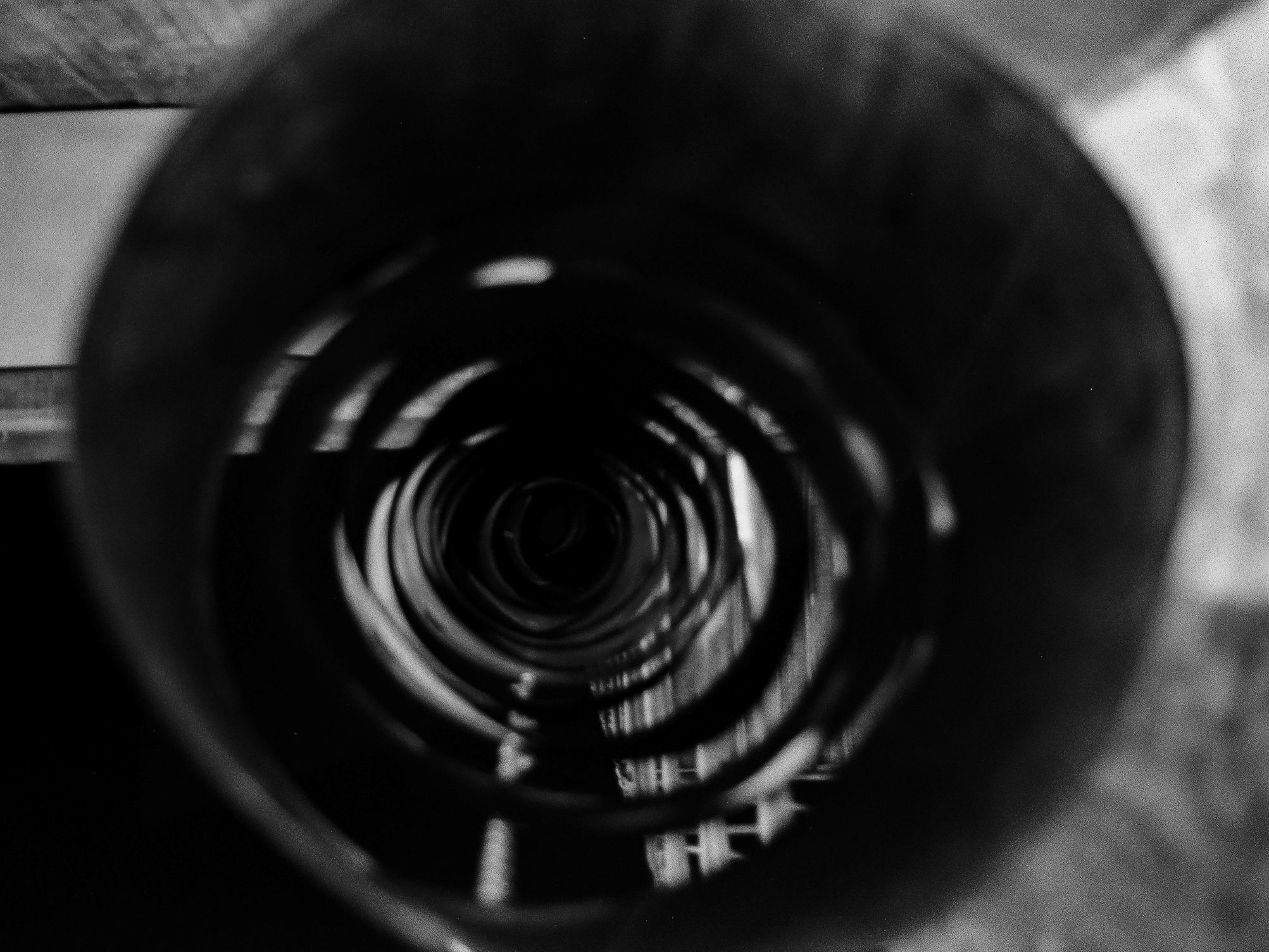
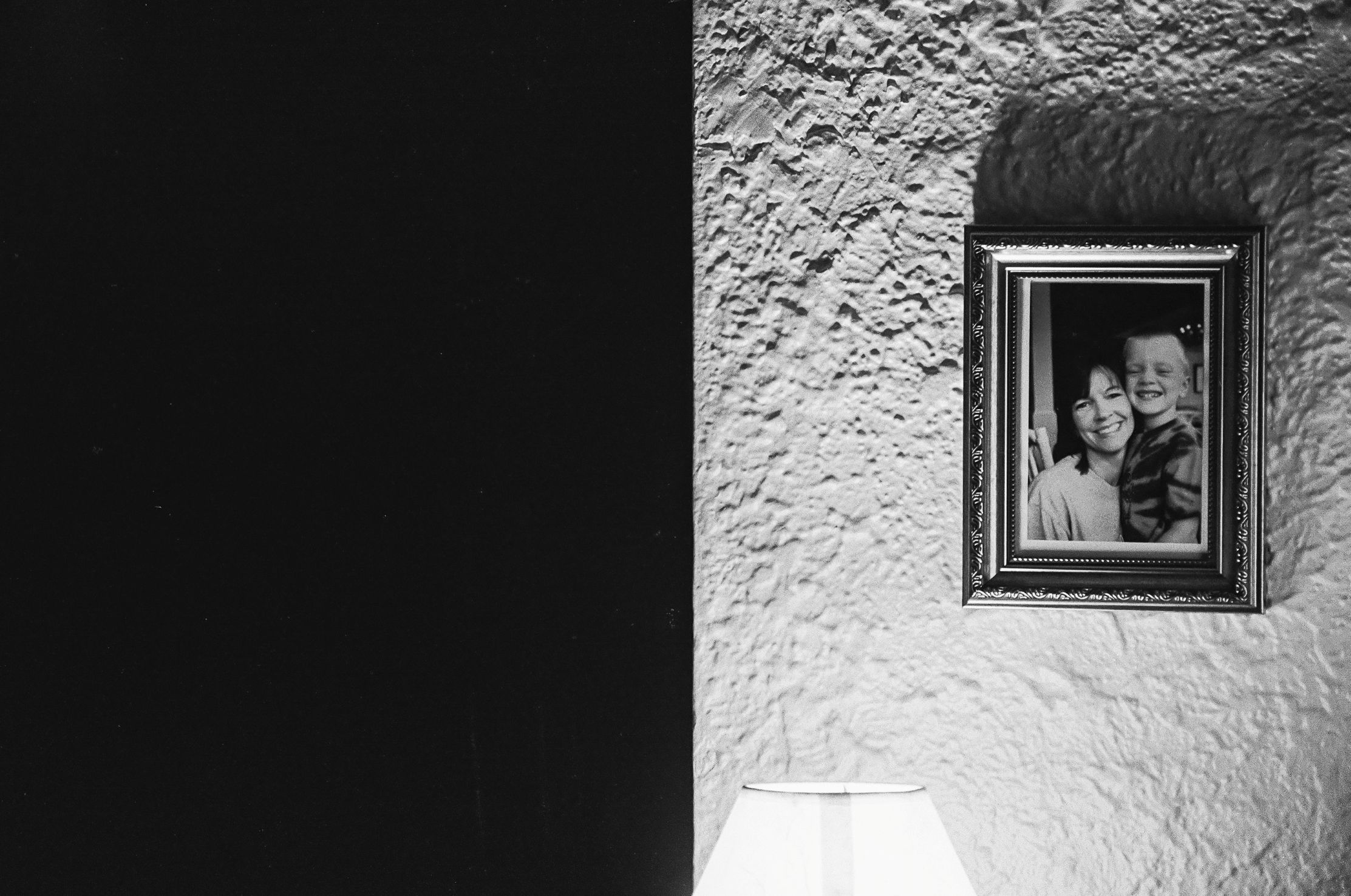
Aren’t memories supposed to console? Isn’t art? I’ve been taking a lot of photographs recently. What I love most about photography, especially film photography, is that you can never really predict how the photograph will make you feel. When I took the picture below, I expected it to convey absence, emptiness, a bottomless hole. But instead, it seems to protrude, to point at the viewer. It looks back, like the eye of a whale. Like the night sky’s pupil, infinitely black, inspecting you.
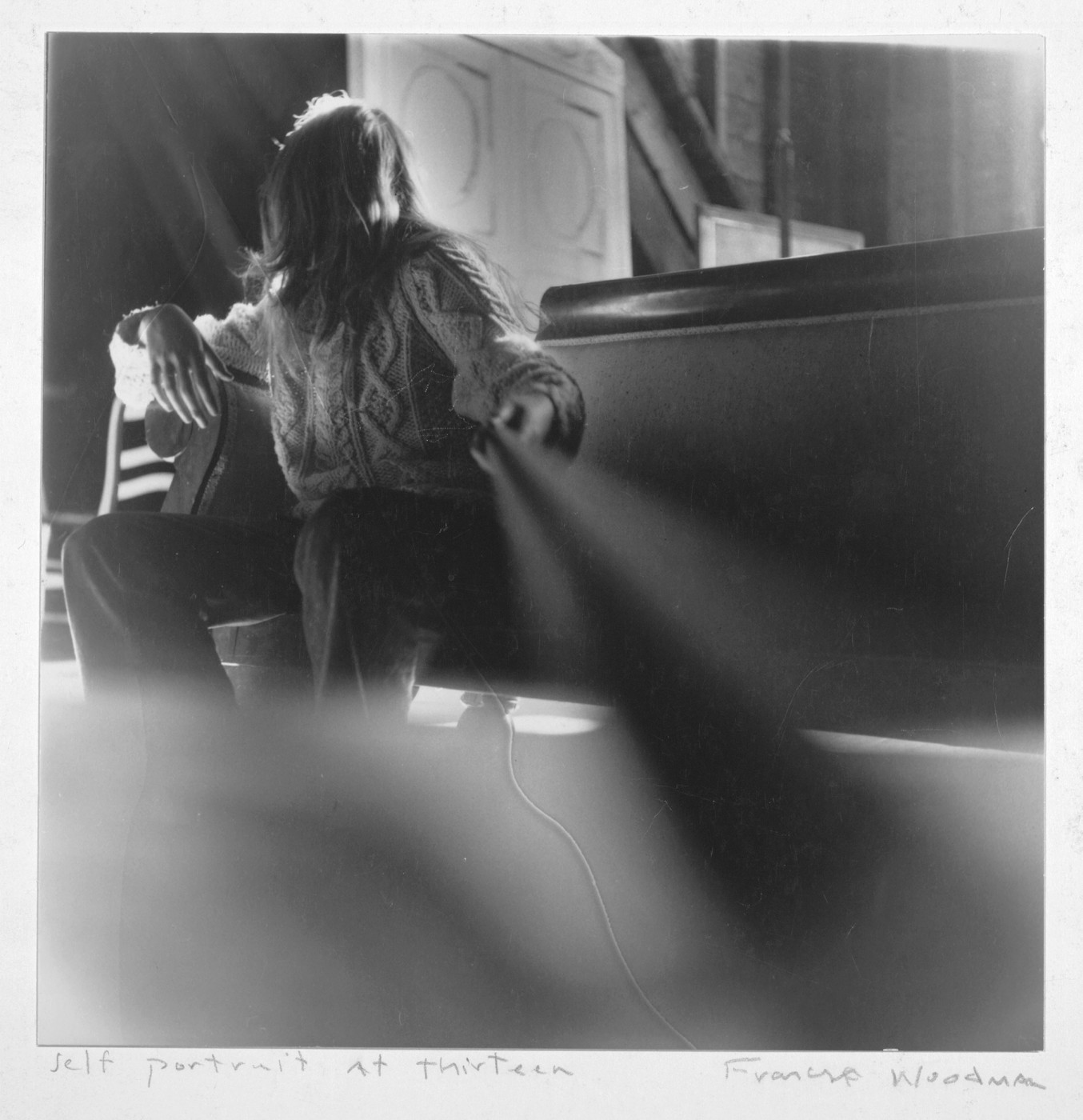
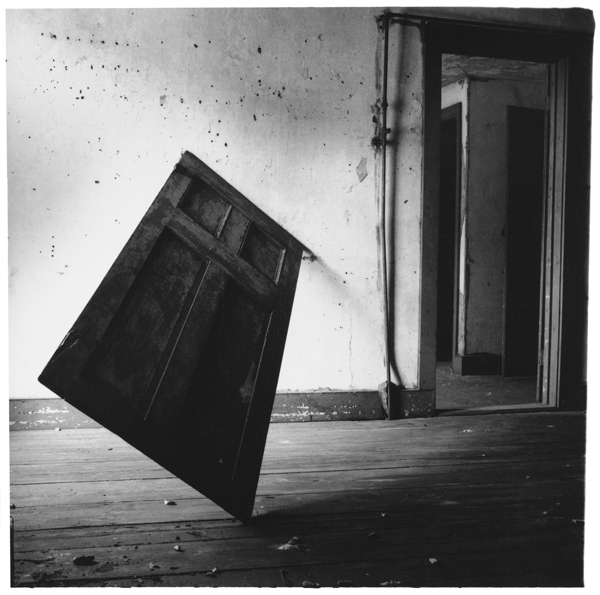
I can’t stop looking at Francesca Woodman’s work. Her photographs are deliberate, meticulously composed and full of intention, but I can’t say what those intentions are. There is an object here, but I can’t see it. The meaning is felt, not articulated. In “self portrait at thirteen,” one of her most conventional and mundane pictures, she holds the camera out from herself and lounges at the end of what looks like a church pew. But look at her fingers, which are so unusually long. Look at her hair. Her surroundings are strange, inexplicably arranged. This is not a church at all. It’s more like a stage, or a storage space. It’s a collection of objects, each suggesting something – somewhere – different. A chair in the light, with no one sitting in it. A door free of any walls, leading to nothing, nowhere. (Woodman was especially fond of the image of an unhinged door – a portal stripped of its actual function, rendered useless and more beautiful.)
 |  |
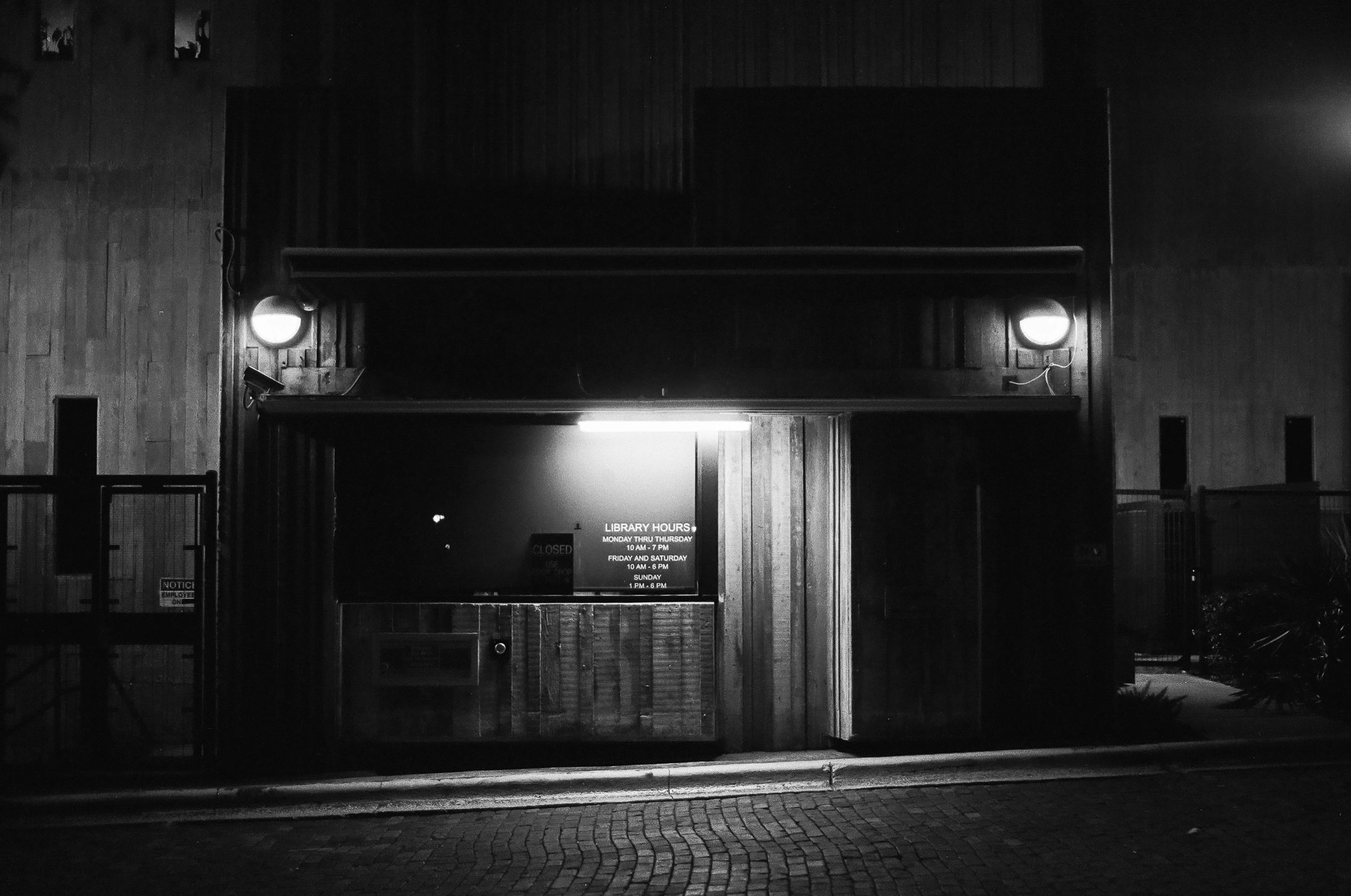
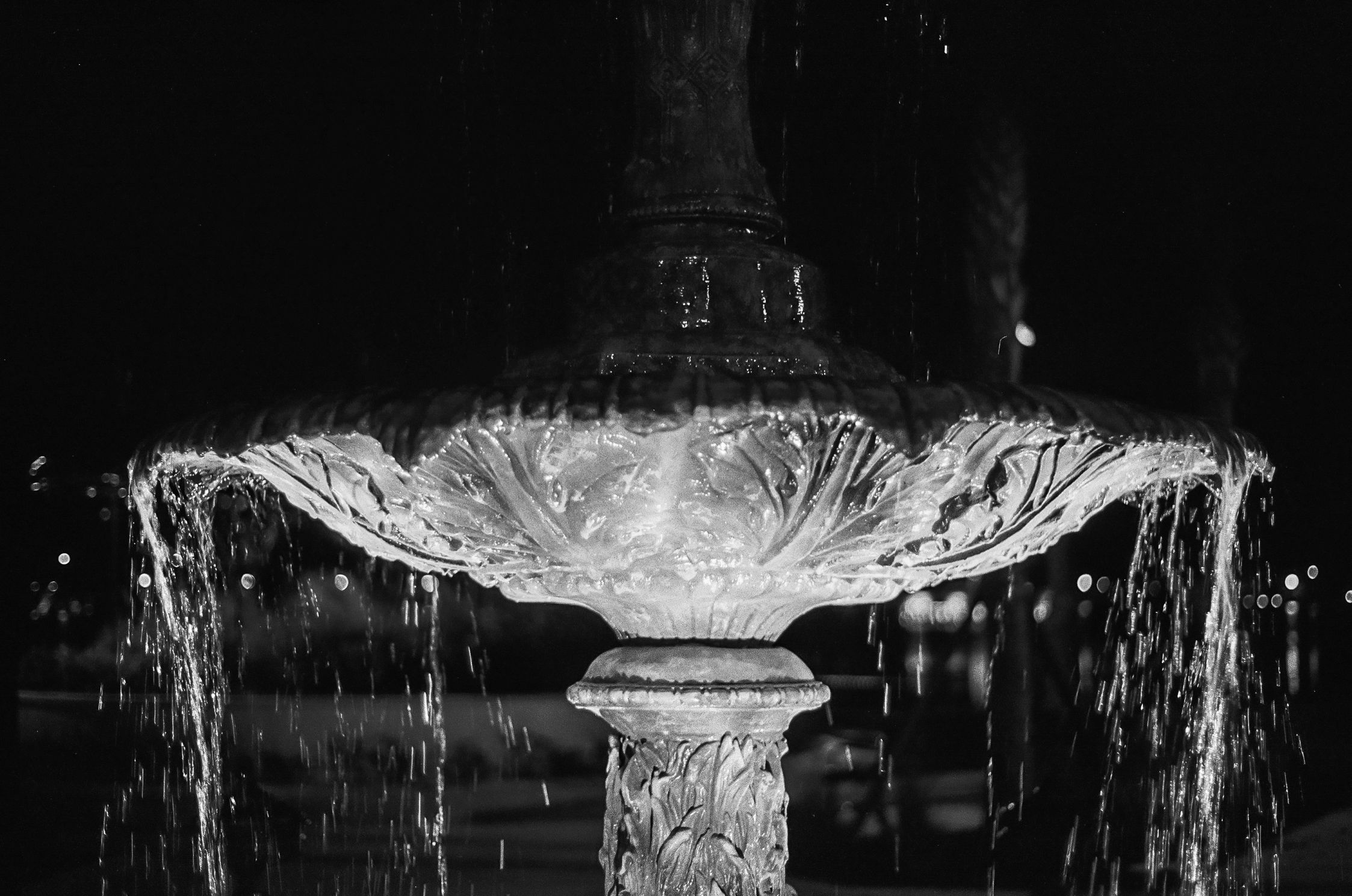
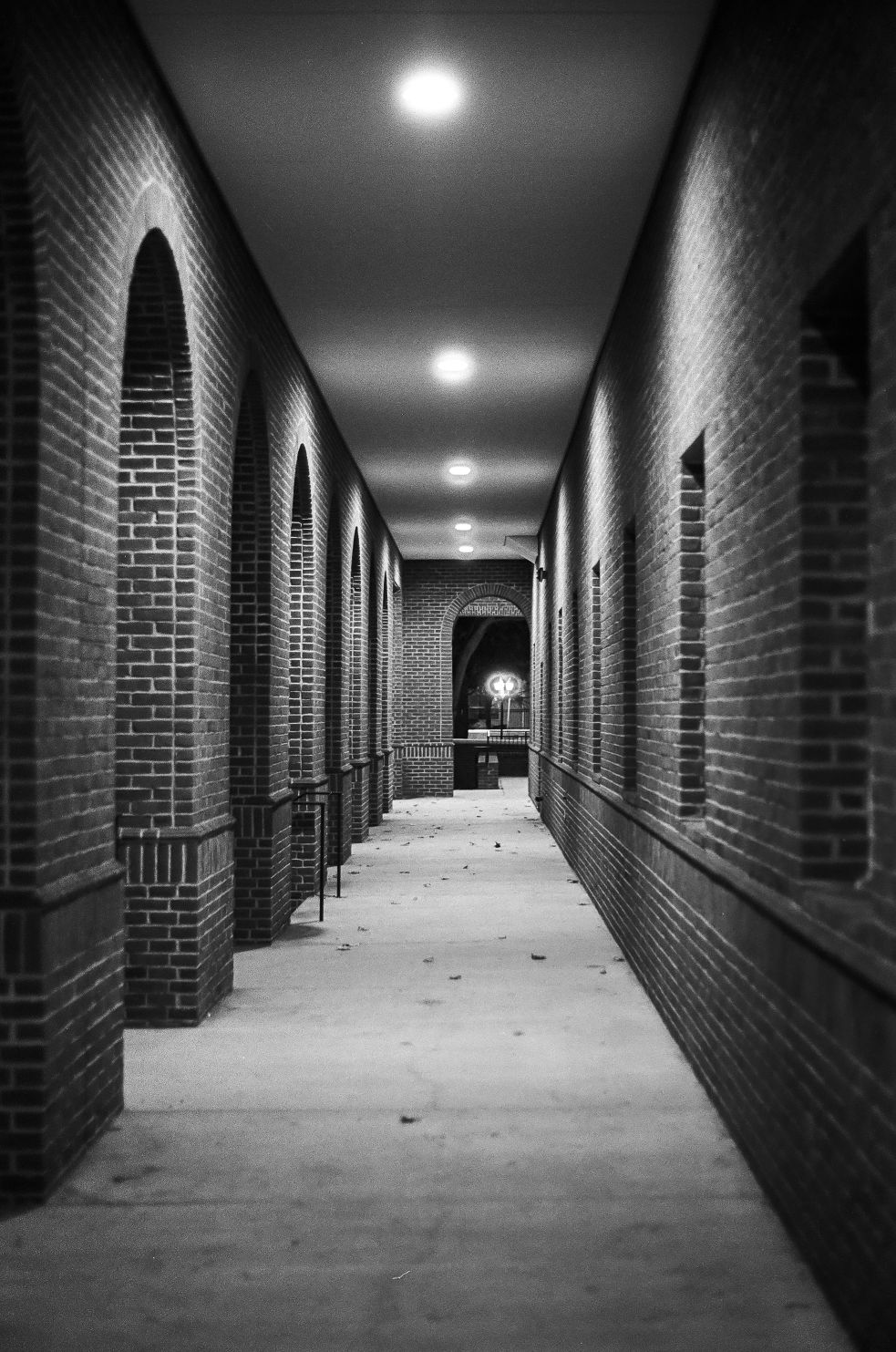
Photography has made me more comfortable with sharing my art. I’ve always loved making art, but I’ve never wanted anyone else to see it (or hear it). Eventually, my insecurities get in the way of creation, damming up my imagination, freezing me in place. But photography is easier to share. I feel less responsible for it. I’m sharing something that already exists, a piece of reality that I didn’t “make.” I blame myself for my writing, because I created all the words; I don’t blame myself for my photographs, not really, because I didn’t create that fountain, or that library dropoff, or that eyeball made of trashcans stacked five stories.
I need to heal my relationship with art. I’ve formed a toxic attachment to it, based upon doubt and self-hatred and melancholy, based on a loss I can’t describe. I’ve spent years creating out of spite, out of fantasy and agitation, rather than inspiration or impulse or appreciation. Art is supposed to “express,” but that is the one thing I’ve never known how to do: express. I mediate my emotions through half-formed tastes, through false aesthetic expectations. My art is always trying to justify itself. I think that’s why I’ve struggled recently to make any, and why I’ve found photography so liberating: I don’t even try to justify it.
I keep discovering and re-discovering the basic fact, known to anyone who’s made art, that art cannot be motivated by a fear of embarrassment, because art is inherently – inescapably – embarrassing.
I’ve lost something. I’ve lost time. I had a lot of fantasies when I was twenty about what the next decade would look like. Almost none of them have come to pass. My life – my world – is not what I would have wanted when I was twenty. I want different things now, things I didn’t daydream about in college. To be honest, I don’t entirely know what I wanted back then. Fame? Monetary success? Love? I no longer want fame, and I’m financially secure. Love I still want, and haven’t found, but I also haven’t “lost” it. I only feel like I’ve lost it, but the loss has no name and no cause, no specific object. Nowhere to direct my frustrated energy except inward, except at my reflection in the mirror.
I think that, until very recently, I hated myself. Not just disliked, but hated. I was driven by a desire to destroy what I hated about myself rather than to nurture what I liked, or even loved. I was weeding without planting, beating the dirt and ordering it to produce flowers. I got angry when the dirt did not comply, so I beat it even harder. I uprooted the daisies planted in my childhood because they weren’t beautiful enough, replacing them with – nothing. After so much abuse, my garden was dead. I was dead.
It’s hard to convince new roots to grow in dead dirt. It takes a lot of time. Here’s how I would describe my twenties: knowing that I have all the time in the world, but feeling like I’m quickly running out of it.
Our economic system encourages this feeling. Capital imposes itself on language through metaphor. Time is always “spent,” like money. Everyone agrees that “time is money.” When we talk about “spending” time, we don’t really intend the metaphor; we just don’t have many other ways to talk about the passage of time except by comparing it to money. But money, unlike time, can be saved. We get to keep the money we don’t spend. We can only “keep” time by watching it tick away, second after second, powerless to stop it. I can’t fit an afternoon in my pocket, or a day in my bank account, or a childhood under my mattress. I have nowhere to put time except behind me.
See you soon,
—Savannah
january 13, 2026
Hiya! How are you? Personally I've been somewhere between dreadful and manically happy. If you've seen my photos page, you already know what I've spent most of my free time doing in the past few weeks — taking pictures! When I got back my first roll of film, I officially became obsessed with photography. There's really nothing like it, being pleasantly surprised by pictures you took weeks ago and forgot about; "oh yeah, I remember that one! wow, I got the shutter speed right, awesome!" I won't burden your internet connection by embedding those pictures here, but please do check out the photos page! I'm genuinely very proud of them. And I'm excited to learn more!
So that's the manically happy part. The dreadful part is — I mean, you see the news. You know what's going on out there. I really shouldn't be as tapped-in as I am; I don't feel more informed on days when I doomscroll for 3 hours than on days when I read the news for 5 minutes; and yet I keep doomscrolling. It's not even always negative. I spend much of that (wasted) time reading things that affirm my views of The Situation, or even encourage me to feel hope about The Situation. But the effects are the same. I don't remember any of it, I don't feel better about it, and my brain goes haywire like I'm drunk on information. I mean it: drunk. My executive functioning is hampered for days afterward. It's an addiction.
I'm starting to realize that I get addicted to things very quickly. I'm addicted to coffee, obviously, and I don't plan to give that up, but I'm also addicted to Phone ("phone is cigarette for eyes"); to Computer; to Negativity in general. I also think I've begun to form a slight addiction (this is a personal, not political, statement) to weed. Last Friday I had by far the worst panic attack of my life. It happened while I was high, as they almost always do. But this one was different. God, I wouldn't wish that feeling on anyone except my absolute worst enemies. It was just awful, an all-out war in my mind, an explosion happening everywhere in my body. It lasted about three hours. When it ended, I was fatigued and drained, like I had just run a marathon or woken up from a long surgery. I swore to take a long break from weed. I really like getting high, most of the time, but I guess I've had too much of a good thing.
By now, I've shaken off the after-effects (physical exhaustion, lack of focus, and a general sense of unease and fragility). I'm going to get more serious about my informational diet, my habits with substances (intoxicating or otherwise), and my self-esteem. I'm going to finish reading bell hooks' Communion today; I've loved every word of it. Her writing is a balm for the soul and a rallying cry for the conscience. Next I plan to read some Rebecca Solnit, and then maybe finish the books I've been "reading" for the last 6 months. This year I will read on an everyday basis (which is different from "I will read every day," a promise I can't possibly keep), and I'll let books fill the space formerly occupied by addictive scrolling.
On that note, my lunch break is halfway over and I want to do some reading before I go back to work. Till next time!!
—Savannah
